Search


07 Mar 2026
Search
07 Mar 2026

Please allow ads as they help fund our trusted local news content.
Kindly add us to your ad blocker whitelist.
If you want further access to Ireland's best local journalism, consider contributing and/or subscribing to our free daily Newsletter .
Support our mission and join our community now.
To continue reading this article, you can subscribe for as little as €0.50 per week which will also give you access to all of our premium content and archived articles!
Alternatively, you can pay €0.50 per article, capped at €1 per day.
Thank you for supporting Ireland's best local journalism!


The legacy of the Troubles continues to impact on the mental health and wellbeing of people in Northern Ireland, a new study has concluded.
Led by researchers from Queen’s University Belfast, the paper found that current post-traumatic stress disorder (PTSD) in those aged 50 and over in the region is as high as 4.74%.
The research also highlights increased levels of depression, social deprivation and harmful health behaviours such as smoking and excess alcohol in those with PTSD.
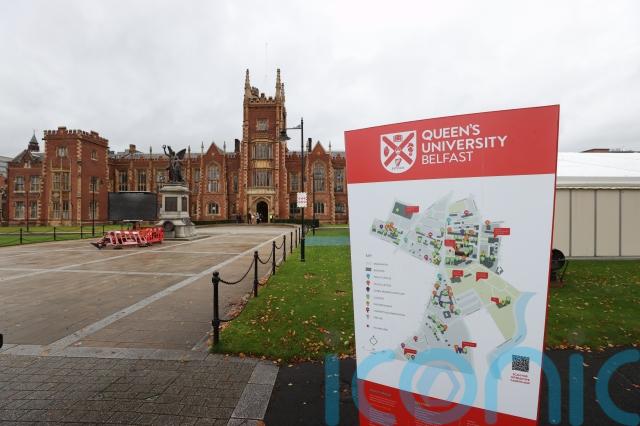
The study was jointly led by Dr Claire Potter from the Centre for Public Health at Queen’s alongside researchers from Trinity College Dublin.
Dr Potter was supervised by Professor Bernadette McGuinness, Professor Frank Kee and Professor Amy Jayne McKnight from Queen’s.
Using data from the Northern Ireland Cohort for the Longitudinal study of Ageing (Nicola), the study looked at more than 2,000 people aged 50 and over from Northern Ireland who reported a previous traumatic event.
Almost 60% of those with PTSD reported the Troubles as their worst traumatic exposure.
Researchers said this suggested long-term consequences of the Troubles.
It also found that those with symptoms of current PTSD had worse memory performance, were less likely to have completed higher educational degrees, twice as likely to be single and more than three times more likely to be living in the most deprived areas of Northern Ireland.
The study said they were also more likely to have chronic and cardiovascular health conditions, to be smokers and have lower levels of physical activity and be more socially isolated.
Dr Potter said: “There is chronic underfunding of mental health in Northern Ireland that does not match the needs of our population.
“Commissioners need to support trauma informed training across health, social care and community sectors, integrate lifestyle and social isolation interventions in our communities, address workforce gaps and continue to support large population studies like Nicola that can inform these policy decisions.”
Professor McGuinness said: “This study from a representative sample of our older population in Northern Ireland highlights the ongoing impact of the Troubles on our participants in terms of mental, cognitive and physical health.
“We call on policymakers to address these gaps in service provision.”
The Nicola study was supported by the Economic and Social Research Council, the Northern Ireland Health and Social Care Research and Development Division, Atlantic Philanthropies, Centre for Ageing Research and Development Ireland, Office of the First Minister and Deputy First Minister Northern Ireland and the Wellcome Trust/Wolfson Foundation, Queen’s University Belfast.
The findings have been published in the journal Social Science & Medicine.

Subscribe or register today to discover more from DonegalLive.ie
Buy the e-paper of the Donegal Democrat, Donegal People's Press, Donegal Post and Inish Times here for instant access to Donegal's premier news titles.
Keep up with the latest news from Donegal with our daily newsletter featuring the most important stories of the day delivered to your inbox every evening at 5pm.

This publication supports the work of the Press Council of Ireland and Office of the Press Ombudsman, and our staff operate within the Code of Practice of the Press Council. You can obtain a copy of the Code, or contact the Council, at www.presscouncil.ie, Lo-call 1800 208 080 or email: info@presscouncil.ie.