Search


12 Apr 2026
Search
12 Apr 2026

Please allow ads as they help fund our trusted local news content.
Kindly add us to your ad blocker whitelist.
If you want further access to Ireland's best local journalism, consider contributing and/or subscribing to our free daily Newsletter .
Support our mission and join our community now.
To continue reading this article, you can subscribe for as little as €0.50 per week which will also give you access to all of our premium content and archived articles!
Alternatively, you can pay €0.50 per article, capped at €1 per day.
Thank you for supporting Ireland's best local journalism!

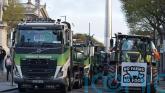
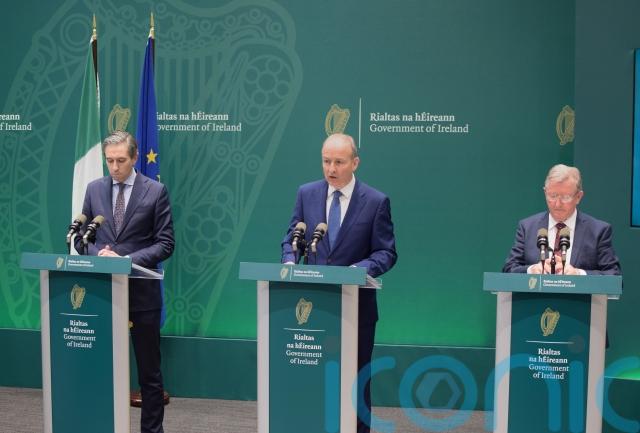
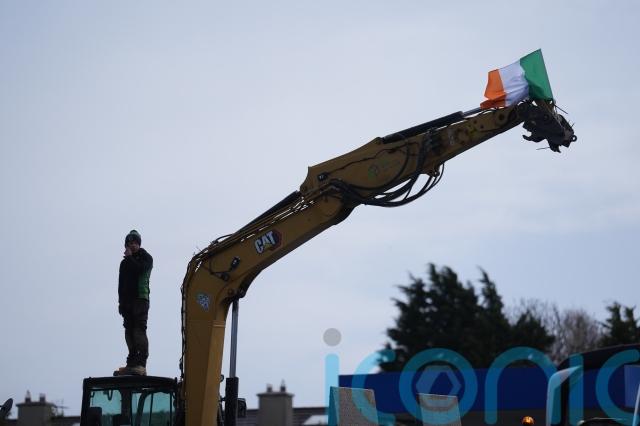
The leadership of the Irish Government has hit out at fuel-cost protesters who staged blockades of critical infrastructure across the country, as it tripled the size of its package of supports.
The 505 million euro in additional measures comes on top of and extends some of last month’s 250 million euro package in response to fuel costs.
Excise cuts on fuel, a delay in a planned increase of a carbon tax, and payments to affected industries – in which most of the protesters worked – were all announced as part of the response to the fuel crisis that emerged as a result of the war in Iran.
Taoiseach Micheal Martin said the Government would undertake a “fundamental security review” after protests which “nearly calamitously endangered oil supply in the country” by blockading critical infrastructure, including Ireland’s only oil refinery.
He told reporters on Sunday that the measures will be paid for by the existing surplus, but added that every item of spending would have consequences on Budget 2027.
He said: “That is of concern as we announce these packages, but it has to be balanced with the fact there is undoubted pressure on people.”
Pressed on whether this would mean running a smaller surplus, Mr Martin said it would depend on revenue and expenditure trends but conceded it would be larger without the announced measures.
He added: “But we are facing an unprecedented crisis globally. If this war continues, volatility continues, that is something of concern to us in terms of the broader range of public services and expenditure we have to provide for.”
Simon Harris, the country’s deputy premier and Finance Minister, said the developments are why the Government runs “an economy that gives us fiscal buffers” and a “surplus”.
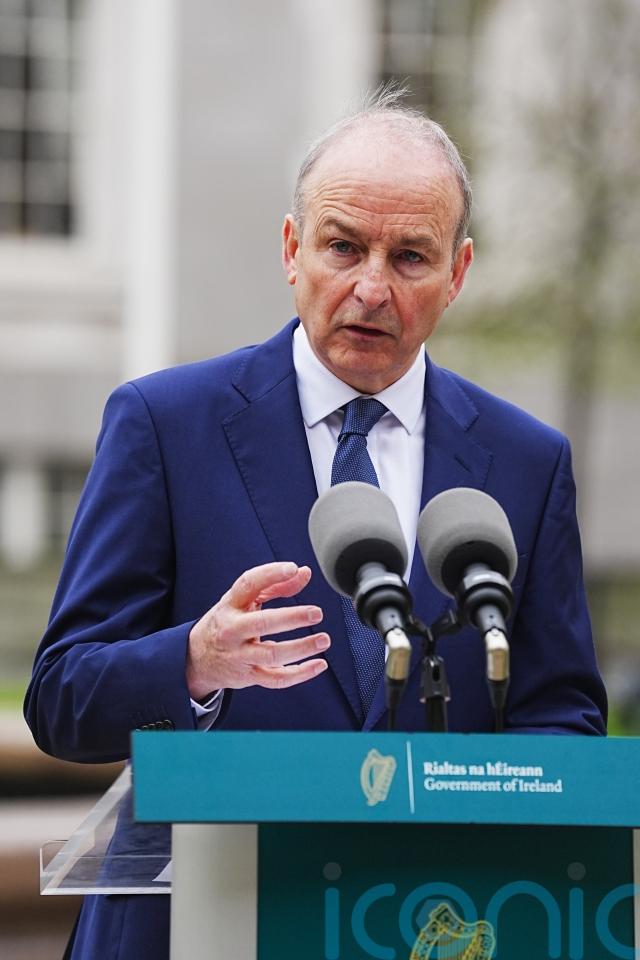
Mr Martin denied that the bumper payments to the agricultural and transport sectors showed that the protest worked.
The Taoiseach said the Government had worked with representative bodies, describing the blockaders as “not working in the best interests of the Irish people”.
Mr Harris said “what worked is the engagement” with representative bodies.
On the protesters, he said there “were extraordinarily frightening scenes” when one spokesman suggested that “wardens” would access the medical needs of people attempting to pass blockades.
Mr Martin said the whole world had been coping with a “dramatic and unexpected increase” in oil prices – as well as oil shortages – as a result of the war in the Middle East.
He added that recent developments – which have included US president Donald Trump calling for a blockade of the Strait of Hormuz and a breakdown of a ceasefire – were “very volatile” and “not reassuring”.
The Government defended its choice to exclude protesters from talks with established representative organisations.
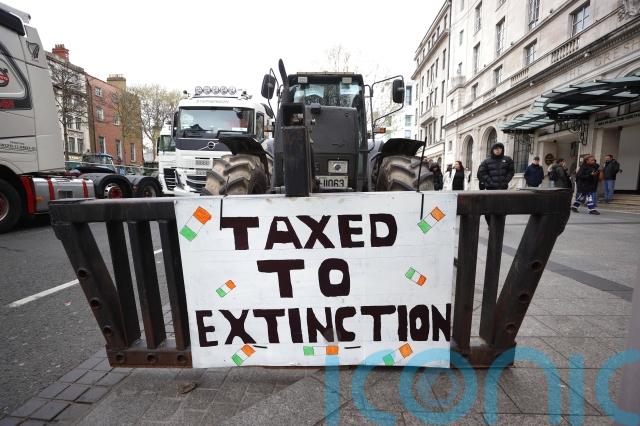
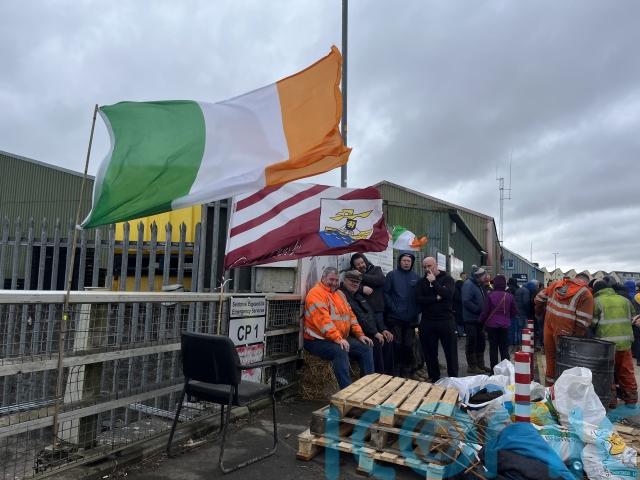
The protesters began action on Tuesday and the last blockades were not cleared until Sunday.
Mr Martin said Government would review the “latitude” given to protesters in the early stages “in terms of the overall security situation of the State”.
The Taoiseach said nobody had a right to blockade the country, prevent the normal operation of emergency services, delay people going for cancer treatment, or to threaten the jobs and livelihoods of others.
He said the targeting of ports and depots represented a “direct threat to basic supplies” and would have impacted on every business and job in the country if not addressed.
He said: “No-one should deny the fundamental right of freedom of mobility, of people, goods or services.”
He added: “The right to protest is important and critical, but it cannot operate with no limits and without any consideration of its impact on wider society and economy.”
Mr Harris agreed, stating that Government could not be “expected to reasonably or rationally engage with self-appointed spokespeople of unelected bodies” and “those who would instigate an illegal blockade of some of this country’s most critical infrastructure at a time of a global energy crisis”.
He said the recent protests had been “extremely concerning” and “profoundly damaging”.
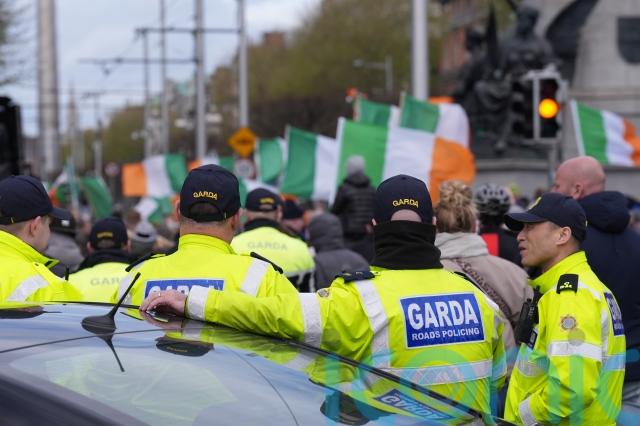
Asked about the response to clearing blockades which saw the use of pepper spray and some physical confrontations with protesters, Mr Martin said the police service An Garda Siochana gave “plenty of warning” and added that there would be no toleration of any attempts to restrict freedom of movement of people and goods.
He said there was an “illogicality” of the protest as it had endangered jobs and businesses.
The Government is also “seeking flexibility” from the European Union on the measures as it has gone below rules on minimum rates for diesel.
The reductions of excise duty will need approval of the country’s parliament – which is also due to vote on a motion of no confidence in the Government that will be brought by the largest opposition party in the country Sinn Fein in criticism of the coalition’s handling of the crisis.
Mr Martin claimed that some TDs supporting a no-confidence vote were in agreement with the people blockading critical infrastructure and therefore “not fit for Government”.
Minister of State Sean Canney, who represents non-party TDs who supported Mr Martin’s Fianna Fail and Mr Harris’ Fine Gael in forming a coalition, said he could confirm that his fellow Government-aligned independents would express confidence in the vote.
He said: “We’re not in Government just for the fun of it. We’re here to make a difference and to make sure that this Government, which is working well coherently, continues to do that.”
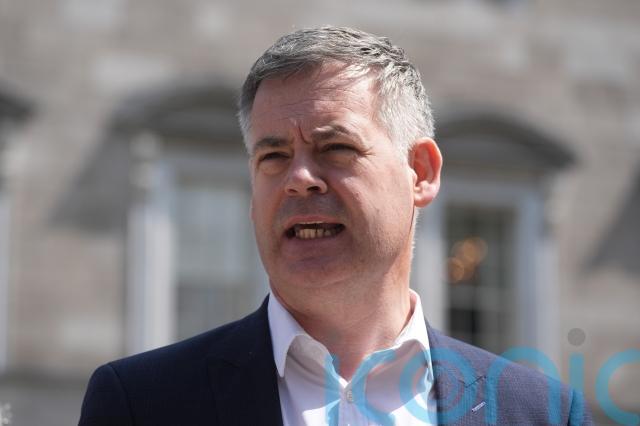
Sinn Fein finance spokesman Pearse Doherty said the measures “fall far short”, stating that it should have gone further on petrol and diesel cuts and scrapped excise on home heating oil.
He said: “They only moved because of public pressure – and even then, they fell short.
“The pressure must now intensify. We will bring forward our motion of no confidence in the government this week.”
The Social Democrats said it would support the Sinn Fein motion, stating that the Government measures “do not address wider cost of living challenges”.
Deputy leader Cian O’Callaghan said the Government failed to do anything to address “skyrocketing” costs of home heating oil which 700,000 households use.
It sought a targeted 400 euro energy credit and a mileage scheme for essential workers.
Labour finance spokesman Ged Nash said the Government was providing little comfort to workers while “buying off” what he described as “narrow sectoral interests”.
He said the Government had “real explaining to do” for 320,000 households in arrears on energy bills.
He added: “The chaos of the last few days has seen this Government’s authority drain away. The basic competence of individual ministers and this administration is now very much in question.
“This is reason enough for Labour to support a planned motion of no confidence in this government.”
Aontu leader Peadar Toibin said Government was in “damage-limitation” mode, describing the handling of protests as a “fiasco factory”.

Subscribe or register today to discover more from DonegalLive.ie
Buy the e-paper of the Donegal Democrat, Donegal People's Press, Donegal Post and Inish Times here for instant access to Donegal's premier news titles.
Keep up with the latest news from Donegal with our daily newsletter featuring the most important stories of the day delivered to your inbox every evening at 5pm.

This publication supports the work of the Press Council of Ireland and Office of the Press Ombudsman, and our staff operate within the Code of Practice of the Press Council. You can obtain a copy of the Code, or contact the Council, at www.presscouncil.ie, Lo-call 1800 208 080 or email: info@presscouncil.ie.