

Stone cold history: Fahan past to be brought to life on heritage walk

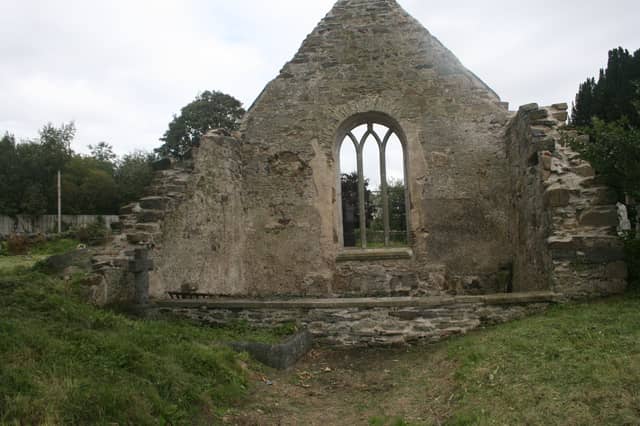

Guided walk through the historic surroundings of St Mura’s Church and graveyard on Sunday, August 23
Fahan Heritage Group is inviting the public to step back through the centuries and explore the history of the area through its ancient buildings, monuments and gravestones during Heritage Week later this month.
The group’s ‘A History in Stones’ event will take place on Sunday, August 23, with a guided walk through the historic surroundings of Saint Mura’s Church and graveyard beginning at 2.30pm.
The tour will examine how stone has provided one of the most enduring records of Fahan’s past, stretching back more than a thousand years to the monastery associated with Saint Mura.
Saint Mura was the first abbot of the great monastery which flourished in Fahan from the seventh to the seventeenth century. One of the most significant reminders of that era is the celebrated cross slab reputedly marking the saint’s grave.
The cross provides a remarkable insight into the artistic achievements of early Irish Christians, while its Greek inscription raises fascinating questions about the influence of Greek Christianity on early Irish religious traditions. It is understood to be the only Greek inscription found on an early Christian cross in Ireland.
The tour will also focus on Fahan Old Church, the graveyard’s most imposing structure. Built in 1620, it was among the earliest ‘Planter’ churches in Ulster, constructed just a decade after the Plantation of Ulster and during a period of profound political upheaval following the unsuccessful rebellion of Sir Cahir O’Doherty.
The many simple graves throughout Saint Mura’s, some marked by little more than a stone, also serve as a reminder that the site has been used as a place of burial for thousands of years.
Among the stories explored will be those behind seventeenth-century graves, including the remarkable tale of Fahan’s own ‘Horatio Nelson’, as well as Agnes Jones, the pioneering nurse and contemporary of Florence Nightingale who dedicated her life to caring for poor and sick people in Liverpool.
The history of Glengollan House will also feature. Built by a Bishop of Derry in the seventeenth century, the house later became a headquarters for Republican and subsequently Free State forces during the Irish Civil War.
The walk will conclude with refreshments and further discussion in Saint Mura’s Church.
The free event [although contributions are welcome] will begin at 2.30pm on Sunday, August 23, from the car park beside the graveyard.